20 Best Facts For Choosing A Zk-Snarks Messenger Website
Wiki Article
The Shield Powered By Zk: How Zk-Snarks Protect Your Ip And Your Identity From The Internet
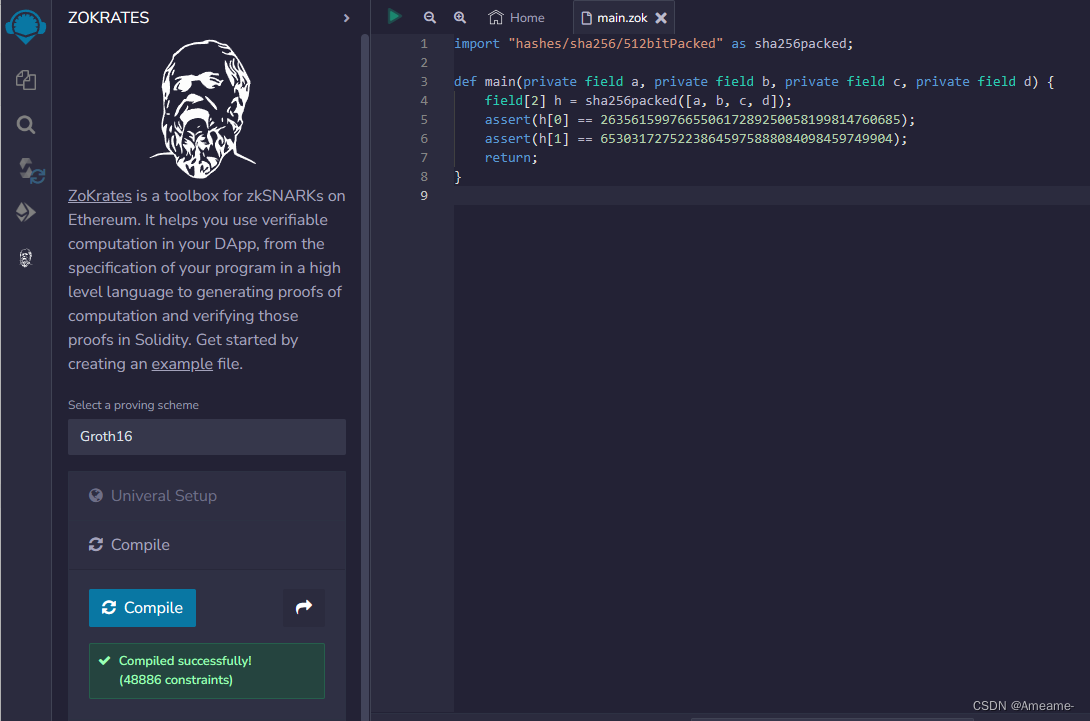
In the past, privacy applications are based on the concept of "hiding among the noise." VPNs guide you through a server. Tor can bounce you between numerous nodes. They're effective, however they disguise from the original source by transferring it in a way that does not require disclosure. Zk-SNARKs (Zero-Knowledge Short Non-Interactive Arguments of Knowledge) introduce a entirely different approach: you will be able to prove that you're authorized to act, but without having to reveal who authorized that you're. This is what Z-Text does. that you are able broadcast a message in the BitcoinZ blockchain. The system can prove that you're legitimate as a person with an authorized shielded email address but cannot identify the specific address sent it. Your address, your name is not known, and the existence of you in the exchange becomes unknowable mathematically to anyone else, yet it is proven to be legitimate for the protocol.
1. The Dissolution of the Sender-Recipient Link
In traditional messaging, despite encryption, can reveal the link. Anyone who is watching can discern "Alice is speaking to Bob." Zk-SNARKs obliterate this link. When Z-Text emits a shielded signal this zk-proof proves transactions are valid, meaning that you have enough funds and the correct keys--without revealing that address nor recipient's address. To anyone who is not a part of the network, the transaction appears as encryption noise coming generated by the network, that is, not from a particular user. The relationship between two individuals becomes difficult to verify.
2. IP Security of Addresses at the Protocol Level, not at the App Level
VPNs as well as Tor provide protection for your IP because they route traffic through intermediaries. But those intermediaries then become points of trust. Z-Text's implementation of zk_SNARKs is a guarantee that your IP is never material to the transaction verification. In broadcasting your encrypted message to the BitcoinZ peer-to-peer network, it means you belong to a large number of nodes. Zk-proof guarantees that, even anyone who observes the communication on the network, they can't be able to connect the received message with the exact wallet that is the originator, as the certificate doesn't hold that information. The IP's information is irrelevant.
3. The Abolition of the "Viewing Key" Challenge
In most privacy-focused blockchains they have the option of having a "viewing key" which can be used to decrypt transaction information. Zk's-SNARKs which are implemented within Zcash's Sapling protocol that is utilized by Z-Text can allow you to disclose your information in a selective manner. One can show they sent you a message without sharing your address, your other transactions, and even the entirety of the message. This proof is the only thing you can share. The granularity of control is not possible in IP-based systems as revealing information about the source address automatically exposes the identity of the sender.
4. Mathematical Anonymity Sets That Scale globally
If you use a mixing service, or VPN where your privacy is dependent on the users in that specific pool at that specific time. The zk-SNARKs program guarantees your anonymity. has been set to every shielded email address within the BitcoinZ blockchain. As the proof indicates that the sender is *some* shielded address in the millions of other addresses, but offers no suggestion of which one. Your security is a part of the network. This means that you are not only in some small circle of peer that are scattered across the globe, but in an international collection of cryptographic identities.
5. Resistance to the Traffic Analysis and Timing Attacks
Expertly-crafted adversaries don't just scan the IP address, but they analyse trends in traffic. They investigate who's sending data what at what point, and they also look for correlations between with the time. Z-Text's use for zk-SNARKs in conjunction with a blockchain-based mempool allows you to separate operations from broadcast. You can construct a proof offline and then broadcast it when a server is ready to be able to relay it. When you broadcast a proof, the time it was made for its inclusion in a block is not necessarily correlated with the when you first constructed the proof, breaking the timing analysis process that frequently degrades anonymity software.
6. Quantum Resistance via Hidden Keys
These IP addresses don't have quantum protection. However, if an attacker could track your online activity now and then break your encryption later you have signed, they will be able to connect it back to you. Zk-SNARKs, which are used within Z-Text are able to protect the keys of your own. Your public key is never visible on blockchains since the evidence proves that your key is valid and does not show the key. The quantum computer, at some point in the future, can observe only the proof not the key. Your previous communications are still private because the secret key used make them sign was never made available as a hacker.
7. Non-linkable Identities for Multiple Conversations
Utilizing a single seed will allow you to make multiple shielded addresses. Zk's SNARKs lets you show that you're the owner of those addresses without revealing the one you own. You can therefore have the possibility of having ten distinct conversations with ten different people, and no user, nor even the blockchain itself could associate those conversations with the exact wallet seed. The social graph of your network can be mathematically separated by design.
8. suppression of Metadata as a security feature
Spy and regulatory officials often tell regulators "we aren't requiring the content it's just metadata." Ip addresses serve as metadata. The person you call is metadata. Zk-SNARKs are unique among privacy technology because they conceal metadata on a cryptographic level. The transactions themselves do not have "from" or "to" fields, which are in plain text. There is no metadata to provide a subpoena. The only data is the documentation, which will only show that an event occurred, and not whom.
9. Trustless Broadcasting Through the P2P Network
If you are using the VPN when you use a VPN, you rely on the VPN service to not keep track of. If you are using Tor then you trust the exit node to not watch you. With Z-Text you send your zk proof transaction to BitcoinZ peer-to-peer network. Connect to a handful of random nodes, broadcast an email, and then leave. Those nodes learn nothing because the data does not prove anything. They aren't even able to prove that you're who initiated the idea, given that you may be providing information to someone else. The internet becomes a trustworthy storage of your personal data.
10. "The Philosophical Leap: Privacy Without Obfuscation
Furthermore, zk's SARKs provide an intellectual leap beyond "hiding" from "proving the truth without divulging." Obfuscation systems recognize that the truth (your IP, your personal information) is a risk and should be concealed. ZkSARKs realize that the fact isn't important. Only the protocol needs to be aware that it is authorized. The shift from hiding in the reactive and proactive relevance forms the basis of ZK's protection. Identity and your IP will never be snuck away; they can be used for any operation of the network thus they're never needed in any way, nor are they transmitted, or exposed. Have a look at the recommended wallet for more info including message of the text, messenger text message, encrypted message in messenger, encrypted messaging app, messenger private, encrypted app, text messenger, encrypted text message app, encrypted text message, encrypted text message app and more.
"The Mutual Handshake: Rebuilding Digital Trust in a Zero-Trust World
The internet was based on an unintentional connection. Anybody can contact anyone. Anybody can follow anyone on social media. This transparency, although valuable was a source of trust. The occurrence of phishing attacks, spam and even harassment are indications of a system for which there is no need for or consent. Z-Text is a way to change this assumption with its mutual handshake. Before a single bit of data exchanges between two individuals the two must be in agreement to the transfer, and that agreement is sealed by an encrypted blockchain. Once it's confirmed, the transaction is validated with zk-SNARKs. Simple acts like this -- requiring mutual agreement in the form of a protocol--builds faith from the ground up. This is akin to the physical world which is that you're not allowed to contact me until I acknowledge you as a person, and I am unable to talk with you until you recognize me. In this age of zero trust, a handshake becomes an essential element of interaction.
1. The handshake as is a ceremony of Cryptography
In ZText, the handshake isn't a straightforward "add contact" button. It's a cryptographic event. The Party A submits a connecting request containing their public key and a temporary, ephemeral address. Party B then receives the request (likely out-of-band or via a public post) and then generates an acknowledgement with their public key. Both parties then independently derive from a shared secret to establish the channels for communication. The ceremony makes sure that the parties actively participate and that no man-in-the-middle can infiltrate the system without detection.
2. "The Death of the Public Directory
Spam can be found because email addresses and copyright belong to public directories. Z-Text does not belong to a public directory. The address you use to sign up is not visible in the blockchain, it hides inside the shielded transactions. A potential contact must already have information about you--your personal identification, your QR code, a secret password to begin the handshake. There's no search functionality. It eliminates the most important source in the case of unprompted contact. There is no way to contact someone with an address you are unable to locate.
3. Consent is used for Protocol In no way is it Policy
In apps that are centralized, consent is a policy. The user can be blocked after you receive a message from them, however they've already entered your inbox. In Z-Text consent is embedded into the protocol. Every message must be received with the handshake prior to it. This handshake serves as unknowledgeable proof that both people involved agreed to the relationship. This means the protocol enforces acceptance rather than only allowing people to react to breaking. This is because the architecture itself is respectful.
4. The Handshake as a Shielded Happening
Because Z-Text employs zk SNARKs, the handshake is secure. When you accept a connection request, the entire transaction is hidden. It is impossible for anyone to see you and another party have been able to establish a relationship. Your social graph grows invisibly. The handshake is conducted in cryptographic blackness that is only visible to the two participants. This contrasts with LinkedIn or Facebook in which each connection is publicized.
5. Reputation, without identity
What do you need to know about who to make a handshake with? Z-Text's model allows for the rise of reputation-based systems that have no dependence on revealed identification. Because connections are private, it is possible to receive a handshake demand from a user who shares the same contacts. They could be able to provide proof for them via a digital attestation without divulging who any of you. The trust is merely temporary and lacks any knowledge the person you trust due to the fact that someone you trust has faith in they are trustworthy, and you never learn the person's identity.
6. The Handshake is a Spam Pre-Filter
With the requirement for handshakes If a spammer is persistent, they could possibly request thousands of handshakes. But each handshake request, like all messages, will require an additional micro-fee. Spammers now face the same economic barrier at the point of connecting. For a million handshakes, it costs 30000 dollars. In the event that they want to pay to you, they'll want to agree. In addition to the fee for handshakes, micro-fees can create two obstacles to economic growth that can make mass outreach financially unsustainable.
7. In the event of a relationship being lost, it is possible to transfer it back.
When you restore your ZText persona from your seed words and your contacts are restored too. What is the way that Z-Text can learn who your contacts really are without a central server? Handshake protocols create simple, encrypted data to the blockchain--a note that connections exist between two secured addresses. When you restore, your wallet scans the blockchain for these handshake notes and creates a new contact list. The social graph of your friends is saved in the blockchain system, however it is only accessible by you. Your contacts are as portable as the funds you have.
8. The Handshake as Quantum-Safe Guarantee
Handshakes that are mutually signed establish a trust between the two sides. This secret may be used to extract keys to be used for future interactions. Because the handshake itself protected, and therefore never gives public keys away, it is not susceptible to quantum decryption. An attacker is not able to decrypt the handshake to discover that the handshake has not exposed any public key. This commitment is enduring, yet it's invisibility.
9. Handshake Revocation and Unhandshake
The trust can be broken. Z-Text enables an "un-handshake"--a cryptographic revocation of the link. When you block someone, your wallet sends out a revocation certificate. This evidence informs your network that messages to that party should be rejected. Since it's on chain, the decision to revoke is permanent that cannot be ignored by another party's clients. The handshake is able to be reversed with the intention of undoing it the same as the initial agreement.
10. The Social Graph as Private Property
Also, the mutual handshake changes who controls your social graph. With centralized social networks, Facebook or WhatsApp hold the information about individuals who are online and to whom. They collect it, study the information, and offer it for sale. On ZText, the social graph is encrypted and saved on a blockchain that can be accessed only by the user. It isn't owned by any corporation. of your contacts. The signature ensures that the only trace of your connection lies with you and your contact, cryptographically protected from the rest of the world. Your network is yours and not an asset of a corporation.